Vast, Our World and Our Resolve - Chapter Seventeen
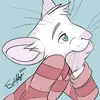 Story by Shotgun FIshing on SoFurry
Our intrepid adventurers immerse themselves in the culture of Uat'sn, as Martin begins to learn about life in the unorthodox faun village and the history of its people. Namo shares her struggles with an all-too-common disorder.
The next several days proved a significant challenge for Martin, who prioritized, at the bare minimum, not making an embarrassment of himself. For one, the man knew next to nothing about construction. That in itself would have been fine; he was willing to learn if it meant smoothing things over until he and Namo were able to acquire the gear they needed. However, his ignorance surrounding even basic carpentry presented the second major challenge: the man couldn’t speak a word of Kepmuun. His supervisor, stout faun man with shaggy hair braided in a myriad of thick cords, who apparently was referred to as Buun, could likely have bent Martin in half if the human crossed him, but he could not bend his tongue to speak English. And so the pair were presented with a significant barrier to progress for the first few days, where Martin had to spend additional time doing his best to grasp basic vocabulary associated with the jobs he was assigned and Buun had to break down tasks in ways simple enough for a child to understand.
Further complicating matters, his shaking hands, sporadic headaches, and craving for whiskey, vodka, beer, or literally any form of alcohol to take the edge off, presented additional barriers to producing quality work. Nevertheless, over the course of the first week, he had assisted in building a wooden balcony for the home of a widow, even going so far as to finish the balcony with a natural stain made from boiling some local leaves and applying a ground powder of unknown origin (to him, at least) to the boiled mixture. The resulting structure was a far cry from the standards of the lavish estates of northern Fordham’s elite, but Martin did take some pride in the physical labor needed to build the structure and mental exertion to grasp instructions for doing so in a language he scarcely comprehended. If Buun had felt a similar pride in Martin’s work, however, he didn’t show it. Nevertheless, Martin found himself enjoying the work—the weather was fair, the sun warm against the brisk mornings he worked, and in the afternoon, he often spied the familiar faces of children that he and Namo had encountered on their first day in the village. The youngsters would always be nearly out of sight, but not quite, spying on him from a safe distance as if he were an animal on exhibit. The man began to make a game out of pretending not to notice them until they began to grow emboldened by his apparent obliviousness. Then, as they would sneak closer and closer to the work site, he’d make a show of turning around and waving, or saying hello, much to the alarm and delight of the children, who would run away giggling.
For her part, Namo naturally excelled at the herbalism work she was assigned. Each evening, she relayed to Martin the exciting finds she and the other members of the foraging party obtained, including new medicinal herbs and roots that, when ground and applied as a topical ointment, could cure symptoms of envenomation by the native lizard-like bidactylans that were known to bite curious children who harass them. She, too, had encountered a few of the village children, who felt much more comfortable around her than they did the strange, nearly-hairless alien. Namo chuckled as she relayed some of the litany of questions the children had interrogated her with:
“Is it true that he eats live animals?”
“I heard that amonuunkep fly giant birds made out of metal! Have you been in one?”
“My friend Tito’o bet me his lunch that humans can laugh but my mom says they can’t. She’s right, right?”
Namo relayed that she had to resist the urge to not perpetuate the tall tales about humans that these children had heard, but she’d continue to do so, as long as he was nice to her.
On the third night of their indentured servitude, Martin was preparing a meal over the fireplace: a corn-squash chowder accented with some locally-foraged herbs Namo had gathered over the course of the past few days, while he tried to have a conversation with their elderly host. He had learned the words for corn and squash, which were easy enough, since they were English loanwords: “ko’on” and “sukua’sn”, an artifact of the plants being originally given by the humans to the Akepmuu as part of their early diplomatic agreements on the planet. This much Martin was learning through his conversation with the man, interpreted by Namo. The human man found it fascinating that these plants, along with beans (“abiin”), which were so firmly a part of faun agriculture, had only been important since contact with humans.
“So what crops did you grow before humans came along, then?” Martin asked, scraping the bottom of the soup-filled cauldron with a long wooden spoon, as Namo interpreted. She had to raise her voice so the man could hear her clearly. Martin’s hands were shaking, sweat beaded from his forehead, and the pounding in his ears plagued him like three devils on his back, but the conversation helped distract him from the worst of his ills borne from alcohol withdrawal.
“Understand that it was a long, long time ago, and we don’t keep written records like humans do. I may be old, but I’m not quite that old,” the graybeard responded with his characteristic nasal chuckle. “But I believe that our people did not grow plants very much at all. Instead, we survived only on the plants that grew around us.” He stroked his beard, as if reminiscing. “Our stories tell of the humans chancing upon family groups of our people as they searched for places to settle, and soon after they provided us with the ‘three sisters’—a human term in its own right—as a goodwill gift. It is what initially endeared our people to yours those hundreds of years ago. After all, what better gift is there than food shared?”
Martin thought back to the first time he and Namo shared a meal together, when Namo had plucked leaves off of a tree and eaten them raw, as if that were a completely normal and healthy thing to do, and even before that, her giving him a satchel of food while she was held at gunpoint. Martin’s heart swelled with a mixture of gratitude and regret: gratitude for the way she had offered Martin not one but two gifts in Kepmuun custom, and regret for the way he had treated her despite her generosity. “So then why even practice agriculture in the first place, if your way of life beforehand was perfectly fine without growing crops?”
The man thoughtfully stroked one of the braids that constituted his hoary beard. “Before you Amonuunkep provided us with the means to grow our own crops, we lived in small groups and were constantly moving from place to place, mostly families no larger than a dozen or so. Our ancestors would occasionally meet when food was plentiful during the spring and fall, only to go their separate ways, sometimes with new groups forming with the marriage of adult children. But we are a social people—always have been, always will be. With the ability and tools to grow our own food, it meant we could form larger groups for longer.”
Martin, deciding that the soup was as done as it was going to get, began ladling portions into bowls Kuubo had provided, as the faun man continued. “It is not without its challenges. We can only grow the three sisters for about half the year. The winters here are long and harsh. In the earlier times, before your people came from the sky, our people would move north. Here in Uat’sn, only some people will move. The dwellings we live in hear are hard to pack and move. But in other places, sometimes whole villages will move.”
With this, Namo interjected. “That’s what we do in Jeju! During the winter, we pack up our whole village and move to the north. But then in spring it gets hot, so we move back south!” She ladled a spoonful and blew on it to cool. “We only grow plants from spring through fall, when we live in the south.” She put the spoonful of soup in her mouth, savoring its flavor. “Oh my goodness, Maa’ko, this is so stinkin’ tasty! It’s just like my parents used to make me when I was just a kid. Are ya sure ya aren’t part Kepmuu?”
Kuubo, for his part, was waiting for the soup to cool, but when he eventually tried it, his eyes lit up as well as he wordlessly savored the soup. Martin found the simple meal a bit bland, but was glad the flavor lived up to faun standards.
After dinner, Martin, with Namo’s assistance, prepared some herbal medicine to help diminish Kuubo’s aches and pains and help him sleep. The Kepmuu woman showed Martin how to grind the herbs and brew them into a tea, which Kuubo drank, leaves and all. Martin ushered the man to bed as the grogginess from the herbal remedy set in.
With Kuubo tucked in to bed, Martin and Namo finally had more time for themselves. However, Martin could no longer ignore the pain in his head, and began searching through the man’s shelves for something that might approximate firewater. After scrounging through sacks of dried leaves, tools, and utensils, he found a shelf containing various corked glass bottles. He uncorked each one of them in turn, taking a whiff. Water, perfume-y water, and then finally, the telltale fruity chemical odor of alcohol. Without so much as pouring a glass for himself, Martin took a hefty swig of the clear liquid. Immediately, the disgusting, searing, beautiful, bitter taste of alcohol swept across his palate and singed his sinuses. Martin paused after three hefty gulps of the liquid and wiped his lips with the back of his arm, stinging tears in his eyes, only to find Namo staring at him incredulously.
“That’s not yours, Maa’ko,” she stated simply, a twinge of disappointment in her voice.
“Just think of it as my medicine,” Martin said. “God, and how I needed it.” He screwed his eyes shut and resisted the urge to vomit as the alcohol vapors scorched through his sinuses.
Namo just frowned. “I know you’re better than this.”
Martin, in response, put the bottle back. “Okay, okay, fine. If my headache goes away, I won’t drink any more of his stash.” He suppressed a hiccup.
The faun merely gave a disappointed half-smile and stayed silent.
Before long, Martin felt his eyelids begin to grow heavy, and the pair made the necessary arrangements for sleep. Namo had relinquished the bed to him from the start of their stay in Uat’sn, saying she preferred the floor anyway. Martin protested during their first night, but she had insisted. She added that there wasn’t enough room for the two of them to sleep next to each other in the bed anyway; the innocuous comment nevertheless caused a warmth the pervade Martin’s cheeks. Tonight, as he climbed onto the worn straw mattress, he felt the drowsiness from the alcohol creep in. Accompanied by his general fatigue from the long day of work, sleep for Martin swallowed him like a welcome blanket.
Martin felt a fuzziness scratching at the edge of his consciousness that faded into a soft, rhythmic clopping sound. He heard the sound getting louder. As his senses regained their acuity, he debated sitting up for a partial second, but settled for merely opening his eyes and turning his head to see the source of the sound. The huamn spotted Namo, crouched in a squat, stoking the faint embers of the fireplace. Out the window to her right, the sky was black. Without having a means to reliably tell time, he suspected that the hour had grown late.
Martin blinked the sleep out of his eyes. “…time is it?”
Startled, Namo’s hackles raised before she turned around. “Oh, did I wake you? I’m so sorry,” she said, her voice nearly a whisper. “You’ve been asleep for a few hours, I’d say. Sun’s gonna rise in maybe four or so hours?”
He rubbed his eyes and sat up. “Why are you up so late?”
Namo sat down, back facing the fire now. She sighed. “I… I just have a hard time sleeping, sometimes. It’s hard getting my thoughts to quiet down and let me sleep.”
“Your thoughts to…quiet down?” Martin squinted in query. “Like, what are you thinking about?”
Namo sighed. “All kinds of stuff. The things I think about go fast sometimes, really fast. It makes it hard to focus during the day and hard to sleep at night. Like tonight. I was thinking about how I can tell you’ve been stressed—even though I’ve only known you for a couple’a weeks. I can see ya looking over your shoulder from time to time, like bad people are gonna be here any minute. And I just… I want to be able to help somehow. That’s just one of the bunches of things that I’m thinking about at any time, like right now.”
Martin was nearly in disbelief. Namo felt that she needed to help him, even after she had basically carried them both all the way here? He almost wondered whether he had heard her correctly. “Namo… you’re helping by traveling with me. It’s safer when we’re together, and I wouldn’t have been able to make it here to Uat’sn without your translating. I wouldn’t even know where Fadina had gone after Fordham.”
“I guess that’s true…” Namo trailed off. “B-but, I know you’re worried about the people here also, especially after what happened in Benuun.”
“We’ve done what we came here to do,” Martin replied, matter-of-factly. “It’s none of my business what happens to them now. Just gotta keep our heads down ‘til we can get back on the road.”
The faun shook her head disapprovingly. “Ya don’t gotta lie to me to make it sound like ya don’t care, Maa’ko. I know better. I saw the way ya helped Kuubo, and not just because ya had to. I saw the way you smiled back at him. And you’re polite to everyone, even the kids when we first got into town. So don’t do those things and then say ya don’t care what happens to these folks. I know what it looks like when Amonuunkep truly don’t care about others. We’ve both seen it—and you don’t look like that.”
Martin didn’t say anything in response, choosing to lie back down instead. He did see Namo smile out of the corner of his eye, however. Eventually, he asked: “So what do you to do try to sleep when you are having a hard time with it? Does anything help?"
“Well, I haven’t found anything particularly great to help focus enough to fall asleep. Usually when I’m outside I just sit still and watch the stars and listen to the sounds around me… but can’t do that right now. Sometimes it’s just something that needs to go away on its own before I go to sleep. Sometimes… sometimes I end up staying up all night,” she disclosed, a little embarrassed.
“Have you tried a warm glass of milk?”
Namo stared at him skeptically. “What? How’s that supposed to help?”
Martin gave the best approximation of a shrug from his prone position. “I dunno, it’s something people do to little kids when they’re having a hard time sleeping. It just works, I guess.”
“Oh, fer goodness sake, I am not a little kid!” Namo said, a petulant tone carrying through her hushed voice. “Also! Milk has given me a stomach ache since I was a kid. So I don’t think that’ll help.”
“How about a cup of tea, then?”
“I don’t have any—“ she thought for a second. “Martin, that’s it! You’re a genius, don’tcha know? The tea from Ms. Goro! She definitely said it would help. Oh, it’s just super of ya to suggest that.” She was having a hard time keeping quiet enough not to disturb Kuubo. Martin was grateful the man was a bit hard of hearing.
The itinerant thief watched as Namo wasted no time putting a kettle on the fire for tea. Soon, their eyes were both drawn in by the hypnotizing effects of the gentle flames. As the water heated in the kettle, his thoughts turned to their time on the road together. In truth, he had a lot of things he wanted to say to the woman. That he appreciated how she cared about him. How he enjoyed the feeling of her head on his shoulder when she leaned on him. The feeling of security and warmth he felt near her, especially when they were alone. How he wished he knew what it was she cried about at night when she thought he was asleep. He lacked the courage to say any of these things, and so simply lied awake while Namo sipped her beggar’s-peach tea. By the time Namo finished her cup, she seemed ready to try sleeping again. She climbed into bed and Martin realized he needed to say something if he were to be able to get back to sleep.
“Hey, Namo?” Martin asked.
“Yes, Maa’ko?” They made eye contact while both lying in their respective beds, her on a mat on the floor and him on a thin mattress only a few centimeters off the ground. Her hair was braided up for the night, and he could make out the telltale signs of fatigue under her eyes.
“I enjoyed it when you slept on my shoulder when we were talking with the chief the other day…even if it was only for a few minutes.”
Namo averted her eyes, and Martin could swear he could see color rush to her face by the dim, flickering light of the fireplace. Martin felt his face grow warm himself. “W-well, I’m glad you d-didn’t mind, at least,” was all the typically loquacious faun had to say. Silence carried the weight of the space between them for several long moments, before Martin broke it. “Goodnight, Namo. I hope you can fall asleep quickly.”
“Mm. Goodnight to you too, Maa’ko. Thank you.” Her voice was a tiny bit slurred by drowsiness.
Martin turned over and just listened to the sounds of the cabin: the gentle popping of the embers of the fire, the wind occasionally whistling through the open windows, and most importantly, the gentle sounds of Namo breathing. He meditated on these sounds, noticing as her breathing slowed and deepened. It seems she had finally been able to go to sleep.
The peacefulness of her own breathing put the man at ease, allowing him to drift off.